My dad used to trade Forex.
I remember watching him sit in front of his laptop, staring at charts moving up and down. I had absolutely no idea what he was doing. To me, it looked like a game.
But I was fascinated.
I didn’t understand the charts, the numbers, or why he spent so much time looking at them. I just knew there was something about that computer that made me want to understand how it worked.
A few years later, I watched Iron Man.
And that fascination became something else. I wanted to build things. Real things. Technology that could do what seemed impossible.
Of course, I wasn’t Tony Stark. I didn’t have a laboratory, expensive equipment, or even a decent computer.
But I discovered something important: if I wanted to build technology, I needed to learn how to code.
So in 2018, I started learning.
My classroom was a small phone with 4 GB of storage and about 312 MB of RAM. I used Opera Mini to read lessons on W3Schools, sometimes relying on just 50 MB of mobile data. I downloaded a tiny code editor called AnWriter. It was barely 1 MB.
That was where I wrote my first HTML and CSS.
No powerful computer. No sophisticated development environment. Just a phone, a browser, and a lot of curiosity.
Eventually, my dad gave me an old HP Compaq CQ56 laptop. It was already about ten years old. And here’s the interesting part: it was the same laptop I’d watched him use years earlier. The one that first made me curious about computers.
Now it was mine.
Over time, I taught myself HTML, CSS, JavaScript, and web development. But technology wasn’t my only interest. I loved photography. I was always taking pictures of people, experimenting with images, and paying attention to how stories could be told visually.
That curiosity led me into video editing. I taught myself how to edit, started creating videos for church, then friends, and eventually began editing professionally for companies.
The more I edited, the more I noticed something: video editing was taking far more time than it needed to. Not because creativity was difficult, but because so much of the process was repetitive.
Then came a project that changed the way I thought about editing.
Sixteen reels.
Two days.
I needed to finish sixteen videos in forty-eight hours. I already had access to Premiere Pro, but I needed something faster for the repetitive work.
While searching for a solution, I discovered Gling, an AI-powered transcript editor. It cost $20. That was the last $20 I had.
I paid for it anyway.
And it worked. It helped me cut footage much faster. But after finishing the cuts in Gling, I still had to take everything back into Premiere Pro to continue editing.
One tool made the process easier. Another gave me the professional control I needed.
Why couldn’t I have both?
I began researching other editing solutions. Some were simple enough for beginners but lacked the flexibility professionals needed. Others were powerful but had complicated interfaces that made learning the software another job entirely.
And I kept coming back to the same questions.
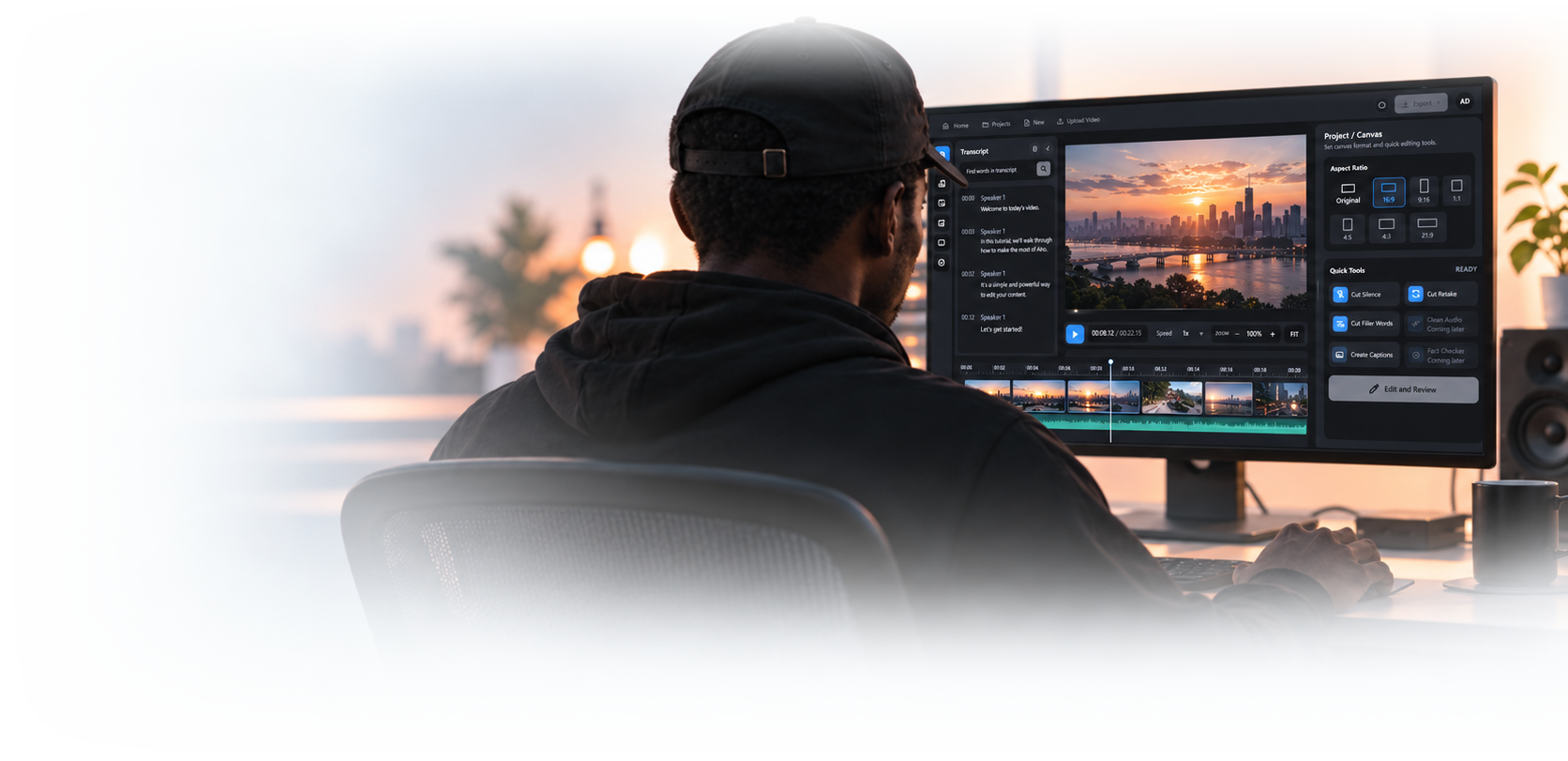
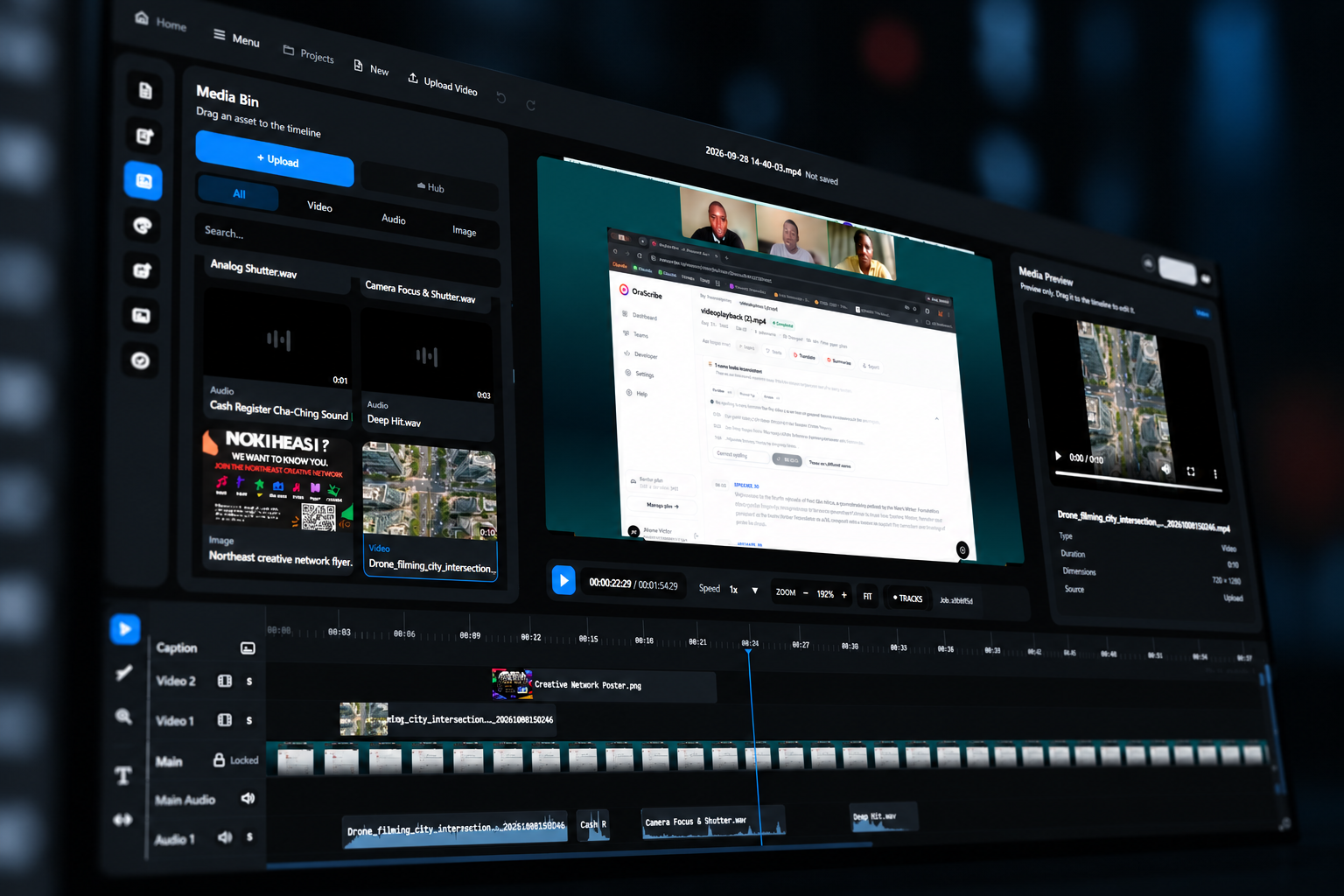
What if someone with no editing experience could open an editor, upload a video, and begin creating?
And what if a professional could use that same editor without feeling restricted?
Those questions became the foundation of Airo Pro.
I started building Airo Pro in April 2026. I wanted an AI-assisted video editing workspace that could handle repetitive tasks without taking creative decisions out of human hands.
But there was another reason I wanted to build it. I was building from Africa.
I understood what it meant to learn technology without expensive equipment, reliable internet, or money for every subscription. I knew what it meant to want access to a tool and have its price become another barrier.
So I didn’t just want to build another video editor. I wanted to build something affordable for African creators. Something developed here, owned here, and capable of serving people everywhere.
That’s part of why I founded Airditor Media: to bring creative technology and storytelling together, and to build tools that make creating more accessible.
Airo Pro is still growing. There’s a lot we’re building, testing, and figuring out.
But sometimes I think about that little phone, those 50 MB of data, and the old laptop my dad eventually gave me.
I started by watching someone else use technology I didn’t understand. Now I’m building technology I hope someone else will use to create something I could never have imagined.
I’m Ayug Sunday Donald.
And I’m still building.